
Social Engineering
Foundations of Social Engineering
Introduction
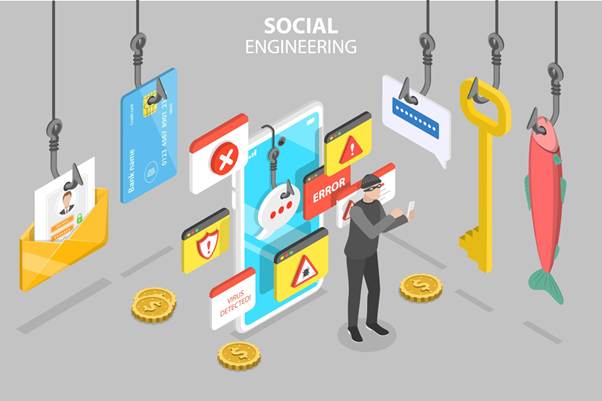
Social engineering is the practice of manipulating human behavior to gain unauthorized access to information, systems, or physical environments. Unlike traditional cyberattacks that focus on exploiting technical vulnerabilities, social engineering attacks exploit trust, psychology, emotions, and human decision-making. Modern cybercriminals often combine reconnaissance, impersonation, and communication-based manipulation techniques to increase the effectiveness of attacks. Social engineering attacks may target employees, executives, support teams, customers, or entire organizations. These attacks are commonly associated with credential theft, financial fraud, espionage, identity theft, and unauthorized system access.
Social Engineering Attack Surface
In modern organizations, attackers identify multiple human attack surfaces before initiating a social engineering campaign. Employees with access to sensitive information, publicly exposed contact details, social media activity, and customer support channels are considered high-value targets. Human attack surfaces are dangerous because security awareness levels vary significantly between individuals. Attackers frequently exploit communication gaps, poor verification procedures, and excessive public information sharing.
Common Human Attack Surfaces
| Attack Surface | Description |
|---|---|
| Employees | Frequently targeted for credentials and internal access |
| Executives | Targeted for financial fraud and confidential data |
| Help Desk Teams | Exploited through impersonation attacks |
| Social Media Platforms | Used for information gathering and profiling |
| Visitors and Vendors | Used during physical social engineering attempts |
Core Elements of Social Engineering
Successful social engineering attacks generally depend on several psychological and behavioral factors. Attackers attempt to create situations where victims react emotionally instead of logically. These attacks commonly rely on authority abuse, urgency creation, emotional manipulation, and relationship exploitation. Modern attackers also use personalization techniques based on information collected during reconnaissance activities.
Core Manipulation Factors
- Authority exploitation
- Trust manipulation
- Fear induction
- Curiosity triggering
- Urgency pressure
- Relationship development
- Behavioral influence
Classification of Social Engineering Attacks
Social engineering attacks can be categorized into human-based attacks and computer-based attacks. Human-based attacks involve direct interaction such as impersonation, vishing, or piggybacking, while computer-based attacks involve phishing emails, malicious websites, fake alerts, or fraudulent applications. Some attacks combine both categories to improve effectiveness and bypass security controls.
Attack Classification Matrix
| Human-Based Attacks | Computer-Based Attacks |
|---|---|
| Vishing | Email Phishing |
| Piggybacking | Smishing |
| Honey Trap | Scareware |
| Eavesdropping | Fake Security Applications |
| Diversion Theft | Pop-Up Window Attacks |
Security Impact of Social Engineering
Social engineering attacks can result in credential compromise, data breaches, ransomware infections, financial fraud, operational disruption, and reputational damage. Organizations often underestimate human vulnerabilities compared to technical vulnerabilities. A single successful social engineering attack may allow attackers to bypass expensive security infrastructure without exploiting software weaknesses.
Organizational Risks
- Unauthorized access to systems
- Financial loss and fraud
- Exposure of confidential information
- Regulatory and compliance violations
- Reputation and customer trust damage
Social engineering primarily targets human behavior.
Which attack surface commonly exposes employee information publicly?
Is urgency commonly used during manipulation attacks?
Which category includes phishing attacks?
An attacker manipulates trust to gain credentials. Which attack category is involved?
Social engineering only targets organizations.
Which factor influences emotional decision-making?
Executives are commonly targeted for financial fraud.
Which attack type involves direct human interaction?
Are help desk teams common social engineering targets?
Which manipulation factor exploits relationships?
Security awareness reduces social engineering risks.
Reconnaissance and Information Gathering
Introduction
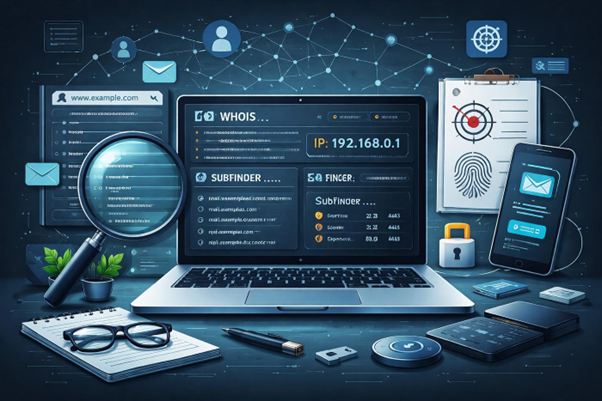
Reconnaissance is one of the most critical phases of social engineering operations because attackers require accurate information about targets before initiating manipulation attempts. During reconnaissance, attackers collect publicly available information related to employees, technologies, organizational structures, vendors, communication methods, and operational activities. This process allows attackers to design personalized phishing campaigns, impersonation attempts, and targeted fraud operations. Modern social engineering attacks are highly successful because attackers spend significant time studying victim behavior and organizational environments before initiating communication.
Reconnaissance Objectives
Attackers perform reconnaissance to understand how organizations operate and identify individuals with valuable access or information. The collected intelligence helps attackers increase attack credibility and reduce suspicion during communication
Primary Reconnaissance Objectives
| Objective | Purpose |
|---|---|
| Employee Identification | Target selection |
| Organizational Mapping | Understand company hierarchy |
| Technology Discovery | Identify software and services |
| Contact Collection | Obtain emails and phone numbers |
| Behavioral Profiling | Understand communication patterns |
Open Source Intelligence (OSINT)
OSINT refers to the process of collecting information from publicly accessible sources. Attackers use search engines, social media platforms, forums, leaked databases, public documents, and company websites to gather intelligence about targets. OSINT activities allow attackers to create highly personalized attacks that appear authentic to victims
Common OSINT Sources
- LinkedIn profiles
- Company websites
- Public PDFs and presentations
- GitHub repositories
- Online business directories
- Social media platforms
- Search engine indexin
Employee Enumeration
Employee enumeration involves identifying staff members, departments, email formats, job positions, and internal hierarchy. Attackers use this information to target specific individuals during phishing or impersonation campaigns. Executive assistants, finance teams, technical administrators, and help desk employees are commonly targeted because they often possess elevated access privileges
Frequently Targeted Roles
| Department | Reason for Targeting |
|---|---|
| Finance | Payment authorization |
| Human Resources | Employee information |
| IT Support | System access |
| Executive Teams | High-level privileges |
| Procurement | Vendor communication |
Social Media Profiling
Social media platforms provide valuable reconnaissance data because employees frequently share workplace information, organizational activities, travel schedules, and professional relationships online. Attackers analyze these details to craft believable communication and establish trust with victims.
Information Commonly Collected
- Employee photographs
- Workplace relationships
- Job responsibilities
- Contact information
- Travel activities
- Conference participation
- Organizational events
Metadata Analysis
Metadata refers to hidden information embedded inside digital files including documents, spreadsheets, images, presentations, and PDFs. Attackers analyze metadata to identify usernames, software versions, internal project names, timestamps, and device information.
Metadata Exposure Examples
| File Type | Potential Exposure |
|---|---|
| Word Documents | Author names |
| Images | GPS coordinates |
| PDFs | Software details |
| Spreadsheets | Hidden revisions |
| Presentations | Internal project data |
Search Engine Reconnaissance
Attackers frequently use advanced search engine queries to discover exposed organizational information. Search engine indexing may unintentionally expose confidential files, login portals, employee directories, or technical infrastructure details.
Common Search Targets
- Public login pages
- Employee directories
- Internal documentation
- Backup files
- Open databases
- Exposed credentials
- Public configuration files
Reconnaissance Frameworks and Tools
Modern reconnaissance activities frequently involve automated frameworks and OSINT collection tools that assist attackers in gathering information efficiently.
Maltego
Maltego is used for relationship mapping, infrastructure visualization, and intelligence correlation. It helps analysts identify relationships between domains, employees, organizations, and public infrastructure.
Key Capabilities
- Relationship mapping
- Infrastructure visualization
- Email enumeration
- Domain intelligence
- Social profiling
theHarvester
theHarvester is a reconnaissance utility designed to collect email addresses, domains, subdomains, and publicly indexed information from search engines and online platforms.
Common Collection Targets
| Data Type | Purpose |
|---|---|
| Email Addresses | Phishing preparation |
| Domains | Infrastructure discovery |
| Hostnames | Network profiling |
| Public Contacts | Target identification |
SpiderFoot
SpiderFoot automates OSINT collection across multiple public intelligence sources. The framework assists with reconnaissance, exposure analysis, and infrastructure profiling.
SpiderFoot Functions
- Automated OSINT scanning
- Threat intelligence collection
- Domain exposure analysis
- Infrastructure correlation
- Public data monitoring
Shodan
Shodan is a search engine used to identify internet-connected devices, exposed services, servers, and infrastructure components. Attackers use Shodan to discover vulnerable or publicly accessible systems.
Commonly Indexed Devices
- Routers
- Web servers
- CCTV systems
- IoT devices
- Firewalls
- Remote access services
Reconnaissance Lifecycle
Reconnaissance activities are usually conducted in multiple stages to maximize attack effectiveness.
Typical Reconnaissance Workflow
- Target Identification
- Public Information Collection
- Organizational Profiling
- Technology Enumeration
- Behavioral Analysis
- Attack Preparation
Defensive Countermeasures
Organizations reduce reconnaissance exposure by limiting public information, monitoring exposed assets, sanitizing metadata, and improving employee awareness.
Recommended Security Practices
| Security Control | Purpose |
|---|---|
| Metadata Sanitization | Prevent hidden data exposure |
| Social Media Policies | Reduce oversharing risks |
| Public Exposure Monitoring | Detect leaked information |
| Employee Awareness | Improve information handling |
| Access Restrictions | Reduce unnecessary exposure |
Which process involves collecting publicly available information?
LinkedIn is commonly used during reconnaissance activities.
Is metadata useful during information gathering?
Which tool maps relationships and infrastructure?
An attacker studies employee roles before sending phishing emails. Which phase is this?
Search engines may expose sensitive organizational files.
Which tool identifies internet-connected systems?
Are finance departments commonly targeted during reconnaissance?
Which hidden file component may expose usernames?
Social media oversharing increases attack exposure.
Which reconnaissance stage involves behavior analysis?
Metadata sanitization reduces information exposure.
Phishing Methodologies and Attack Frameworks

Introduction
Phishing is one of the most widely used social engineering methodologies in cybersecurity attacks. Attackers use deceptive communication techniques to manipulate victims into revealing credentials, installing malware, approving fraudulent transactions, or granting unauthorized access. Modern phishing attacks are highly sophisticated because attackers combine reconnaissance, impersonation, psychological manipulation, and technical deception to create convincing attack scenarios. Phishing campaigns target employees, executives, financial departments, customers, and even security teams.
Phishing Attack Lifecycle
Most phishing campaigns follow a structured operational workflow designed to maximize success rates and reduce detection.
Typical Phishing Lifecycle
| Phase | Activity |
|---|---|
| Reconnaissance | Information collection |
| Target Selection | Victim identification |
| Payload Creation | Malicious content preparation |
| Delivery | Email, SMS, or call distribution |
| Exploitation | Credential or access theft |
| Persistence | Continued attacker access |
Email Phishing
Email phishing attacks involve fraudulent emails containing fake login portals, malicious links, infected attachments, or deceptive instructions. Attackers frequently impersonate banks, cloud providers, HR departments, vendors, or internal support teams.
Common Email Indicators
- Suspicious sender domains
- Urgent language
- Fake attachments
- Credential requests
- Poor grammar
- Unexpected invoices
- Password reset alerts
Spear Phishing
Spear phishing is a highly targeted phishing methodology directed at specific individuals or departments. Attackers personalize communication using employee names, internal terminology, vendors, and organizational activities.
Common Spear Phishing Targets
| Target Group | Objective |
|---|---|
| Finance Teams | Fraudulent payments |
| HR Departments | Employee data theft |
| IT Administrators | Privileged access |
| Executives | Business compromise |
| Procurement Teams | Vendor fraud |
Whaling Attacks
Whaling attacks specifically target executives and senior decision-makers within organizations. Because executive accounts often possess elevated privileges, successful whaling attacks can result in major operational and financial compromise.
Executive Attack Goals
- Wire transfer fraud
- Credential compromise
- Confidential document theft
- Business email compromise
- Strategic intelligence collection
Clone Phishing
Clone phishing involves duplicating legitimate organizational emails and replacing original links or attachments with malicious content. Victims trust the communication because it resembles previously received legitimate emails.
Clone Phishing Characteristics
| Indicator | Description |
|---|---|
| Familiar Sender | Appears trusted |
| Modified Attachment | Delivers malicious payload |
| Duplicate Layout | Mimics legitimate email |
| Urgent Request | Encourages interaction |
Smishing Operations
Smishing attacks use SMS communication and mobile messaging platforms to manipulate victims into revealing sensitive information or interacting with malicious links.
Common Smishing Scenarios
- Fake delivery notifications
- Banking alerts
- OTP verification scams
- Reward messages
- Security warnings
- Subscription renewal notices
Vishing Operations
Vishing attacks involve voice-based manipulation using phone calls, VoIP systems, or communication applications. Attackers frequently impersonate banks, government agencies, technical support personnel, or executives.
Common Vishing Objectives
| Scenario | Objective |
|---|---|
| Fake Support Call | Remote access compromise |
| Banking Verification | Financial theft |
| OTP Confirmation | Account takeover |
| Executive Escalation |
Internal fraud |
Phishing Infrastructure Components
Modern phishing operations frequently involve multiple technical and operational components working together.
Common Infrastructure Elements
- Fake login portals
- Spoofed domains
- Credential harvesting pages
- Email spoofing systems
- URL shortening services
- Session interception mechanisms
Social Engineering Frameworks and Toolkits
Security professionals use multiple frameworks during phishing awareness assessments and authorized penetration testing exercises.
Social-Engineer Toolkit (SET)
SET is widely used for phishing simulations, credential harvesting demonstrations, and awareness testing activities.
SET Features
- Website cloning
- Credential harvesting
- Phishing simulations
- Email attack modules
- Payload generation
GoPhish
GoPhish is an open-source framework designed for phishing campaign simulation and employee awareness assessments.
Operational Capabilities
| Capability | Purpose |
|---|---|
| Campaign Tracking | User interaction monitoring |
| Landing Pages | Credential simulation |
| Reporting Dashboard | Awareness analysis |
| Email Templates | Simulation creation |
Evilginx
Evilginx demonstrates advanced phishing methodologies involving session interception and authentication capture simulations.
Security Research Areas
- Session hijacking simulations
- MFA bypass demonstrations
- Authentication analysis
- Token interception research
King Phisher
King Phisher supports phishing awareness campaigns, reporting analysis, and employee interaction monitoring.
Awareness Features
- User interaction analysis
- Campaign analytics
- Credential simulation
- Reporting dashboards
- Awareness assessment
Phishing Defensive Strategies
Organizations reduce phishing risks through layered defensive controls and employee awareness initiatives.
Recommended Defensive Controls
| Defensive Measure | Purpose |
|---|---|
| MFA Deployment |
Protect accounts |
| Email Filtering | Block malicious emails |
| Awareness Training | Improve detection |
| URL Verification | Prevent fake portal access |
| Reporting Mechanisms | Improve response time |
Which attack commonly uses fake login portals?
Spear phishing targets specific individuals.
Is smishing performed through SMS communication?
Which phishing attack commonly targets executives?
Clone phishing duplicates legitimate communication.
Which framework supports phishing simulations?
Credential harvesting commonly appears in phishing attacks.
Which phishing type uses personalized information?
Are urgent subject lines suspicious indicators??
Which toolkit supports credential harvesting demonstrations?
MFA reduces credential compromise risks.
Which framework demonstrates session interception attacks?
Psychological Manipulation and Behavioral Exploitation

Introduction
Psychological manipulation is the foundation of most social engineering operations because attackers depend heavily on human emotions, decision-making weaknesses, and behavioral responses. Instead of bypassing firewalls or exploiting software vulnerabilities, attackers manipulate trust, fear, curiosity, urgency, authority, and emotional reactions to influence victims into performing unsafe actions. Modern social engineering campaigns are carefully designed around human psychology and communication patterns. Attackers study victim behavior, workplace hierarchy, and emotional triggers to maximize attack success rates.
Authority-Based Manipulation
Authority-based manipulation occurs when attackers impersonate executives, managers, law enforcement personnel, technical support staff, or government agencies. Victims are more likely to obey instructions from individuals perceived as authoritative or influential. Attackers exploit organizational hierarchy and workplace culture to pressure victims into bypassing normal verification procedures.
Common Authority Exploitation Scenarios
| Scenario | Attacker Objective |
|---|---|
| Fake CEO Email | Financial fraud |
| Technical Support Calls | Credential theft |
| Government Verification Request | Personal information collection |
| HR Department Impersonation | Employee data access |
| Vendor Escalation Messages | Payment manipulation |
Fear and Urgency Tactics
Attackers frequently use fear and urgency to force victims into reacting emotionally rather than logically. Threatening messages involving account suspension, malware infection alerts, payroll issues, or security violations are designed to create panic and rushed decision-making.
Indicators of Fear-Based Manipulation
- Immediate action requirements
- Threatening language
- Time-sensitive deadlines
- Account suspension warnings
- Security violation notifications
- Emergency escalation requests
Curiosity and Reward Exploitation
Curiosity-based manipulation attempts to tempt victims with attractive information, rewards, confidential documents, or financial opportunities. Victims may ignore security precautions because the communication appears exciting or valuable.
Common Curiosity Triggers
| Trigger Type | Example |
|---|---|
| Financial Reward | Lottery or bonus scam |
| Confidential Data | Salary report leak |
| Celebrity Content | Fake media downloads |
| Internal Documents | Confidential attachment |
| Security Reports | Fake investigation notice |
Trust Development and Relationship Manipulation
Some social engineering attacks involve long-term trust development where attackers slowly build credibility with victims before requesting information or access. Attackers may impersonate coworkers, recruiters, vendors, or support personnel over extended periods.
Relationship Manipulation Objectives
- Credential collection
- Internal access requests
- Financial manipulation
- Data exfiltration
- Organizational profiling
Emotional Trigger Analysis
Attackers commonly target specific emotional states to weaken defensive decision-making. Emotional manipulation may involve sympathy, panic, excitement, loyalty, stress, or anger.
Frequently Exploited Emotions
| Emotion | Attack Usage |
|---|---|
| Fear | Threat-based manipulation |
| Curiosity | Suspicious attachment opening |
| Sympathy | Fake emergency requests |
| Excitement | Reward and lottery scams |
| Trust | Relationship exploitation |
| Stress | Urgent compliance requests |
Defensive Awareness Practices
Organizations reduce psychological manipulation risks by improving employee awareness, verification procedures, reporting mechanisms, and communication validation processes.
Recommended Defensive Controls
- Multi-factor authentication
- Independent verification procedures
- Awareness training programs
- Incident reporting mechanisms
- Email verification policies
- Executive communication validation
Which manipulation technique exploits workplace hierarchy?
Fear-based attacks commonly use urgent deadlines.
Is curiosity commonly targeted using fake rewards?
Which emotional trigger commonly pressures quick decisions?
A fake CEO requests an urgent financial transfer. Which technique is used?
Relationship manipulation builds trust over time.
Which emotional state is targeted during lottery scams?
Independent verification reduces manipulation risks.
Which tactic commonly uses threatening language?
Emotional manipulation bypasses logical thinking.
Which attack objective commonly involves relationship exploitation?
Awareness training improves manipulation detection.
Human Interaction and Physical Social Engineering

Introduction
Human interaction based social engineering attacks involve direct communication, physical interaction, or behavioral observation to manipulate victims and bypass security controls. These attacks commonly occur in workplaces, public environments, conferences, reception areas, and organizational facilities. Unlike digital attacks, physical social engineering attempts often rely on confidence, deception, impersonation, and social behavior. Attackers exploit politeness, workplace trust, and insufficient physical verification procedures.
Vishing Operations
Vishing attacks use voice communication channels including phone calls, VoIP systems, and support communication platforms to manipulate victims into revealing sensitive information.
Common Vishing Objectives
| Attack Scenario | Objective |
|---|---|
| Fake Banking Call | Financial credential theft |
| Technical Support Scam | Remote access compromise |
| OTP Verification Request | Account takeover |
| Delivery Confirmation Call | Identity verification abuse |
| Government Compliance Call | Personal information collection |
Eavesdropping Techniques
Eavesdropping involves secretly listening to conversations to collect confidential information. Attackers commonly monitor public discussions, office conversations, meetings, and phone calls conducted in insecure locations.
Frequently Exposed Information
- Password discussions
- Internal project details
- Financial information
- Employee schedules
- Customer information
- Authentication procedures
Piggybacking and Tailgating
Piggybacking occurs when unauthorized individuals gain physical access by following authorized personnel into restricted areas. Tailgating attacks commonly target office buildings, data centers, and secured facilities.
Physical Access Risks
| Risk Category | Impact |
|---|---|
| Unauthorized System Access | Credential compromise |
| Device Theft | Data exposure |
| Internal Reconnaissance | Infrastructure profiling |
| Malware Installation | System compromise |
| Surveillance Placement | Long-term monitoring |
Diversion Theft Operations
Diversion theft attacks involve redirecting deliveries, assets, or confidential materials to unauthorized locations. Attackers manipulate shipping processes, impersonate logistics personnel, or alter delivery instructions.
Common Diversion Targets
- Financial documents
- Technical equipment
- Corporate devices
- Payment-related assets
- Confidential contracts
Honey Trap Methodology
Honey trap attacks involve building emotional or romantic relationships with targets to influence decisions or collect confidential information. These attacks may occur through social media platforms, messaging applications, or direct interaction.
Honey Trap Attack Indicators
- Excessive personal interest
- Unusual information requests
- Emotional dependency creation
- Rapid trust development
- Requests involving confidential matters
Dumpster Diving Operations
Dumpster diving refers to collecting sensitive information from discarded organizational materials. Attackers search waste containers for printed documents, credentials, invoices, diagrams, and employee records.
Commonly Recovered Materials
| Material Type | Potential Exposure |
|---|---|
| Printed Credentials | Account compromise |
| Organizational Charts | Internal profiling |
| Invoices | Financial information |
| Employee Records | Identity exposure |
| Technical Diagrams | Infrastructure details |
Physical Security Defensive Measures
Organizations reduce physical social engineering risks through access control systems, visitor verification procedures, surveillance monitoring, employee awareness programs, and secure disposal policies.
Recommended Physical Controls
- Visitor badge systems
- Secure access checkpoints
- CCTV monitoring
- Confidential waste shredding
- Security awareness training
- Restricted area verification
Which attack uses phone calls to steal sensitive information?
Piggybacking targets physical security systems.
Is dumpster diving used during reconnaissance activities?
Which attack secretly monitors conversations?
An attacker follows an employee into a restricted office. Which attack is this?
Honey trap attacks build emotional trust.
Which process redirects deliveries to unauthorized locations?
Are public conversations dangerous in organizational environments?
Which defensive control reduces unauthorized building access?
Which attack method commonly targets discarded organizational documents?
Which attack manipulates logistics and delivery systems?
Which attack uses emotional trust to collect information?
Defensive Awareness and Social Engineering Prevention
Introduction
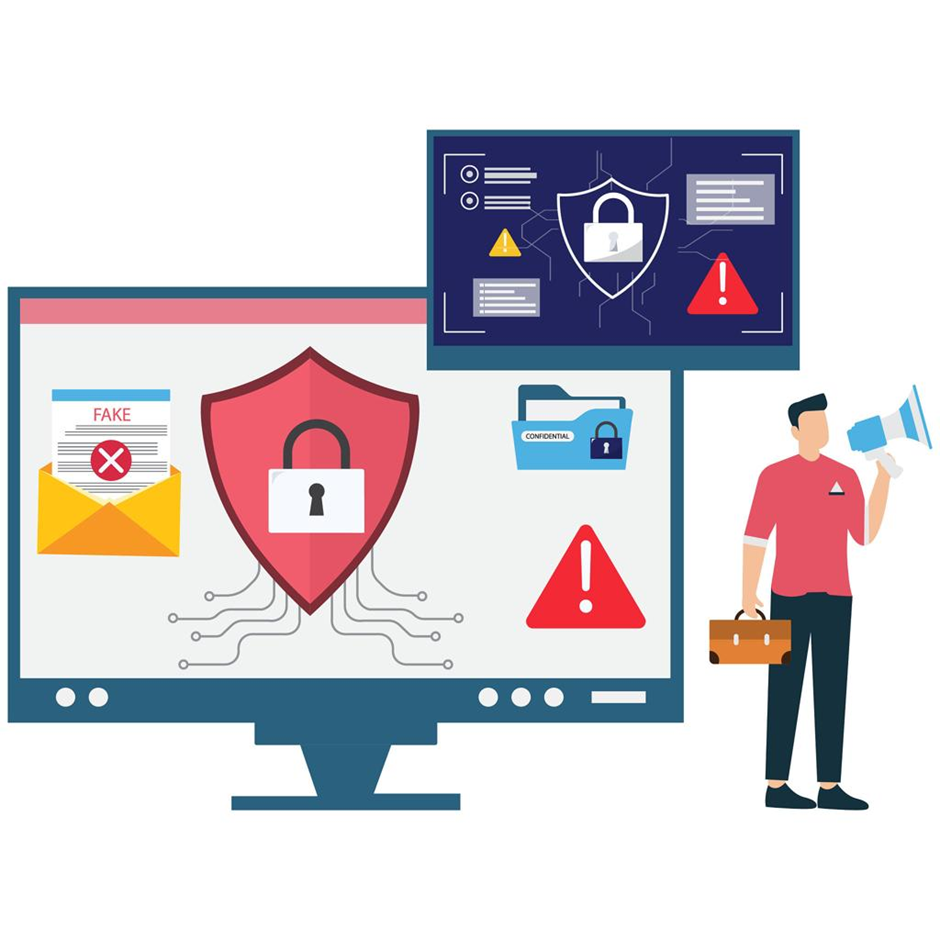
Defending against social engineering attacks requires a combination of human awareness, organizational policies, technical controls, and communication verification practices. Unlike traditional cyberattacks that target software vulnerabilities, social engineering attacks exploit human behavior and psychological weaknesses. Organizations must therefore strengthen both technical defenses and employee awareness programs to reduce attack success rates. Modern cybersecurity strategies increasingly focus on building a security-aware culture capable of identifying suspicious communication, manipulation attempts, and unauthorized requests.
Security Awareness Programs
Security awareness programs are designed to educate employees about phishing attacks, impersonation attempts, manipulation tactics, and suspicious communication indicators. Effective awareness training improves employee response capabilities and reduces the likelihood of successful attacks.
Key Components of Awareness Training
| Component | Objective |
|---|---|
| Phishing Simulations | Test employee awareness |
| Security Workshops | Improve behavioral defense |
| Awareness Assessments | Measure security understanding |
| Incident Reporting Training | Improve response time |
| Executive Awareness Sessions | Protect high-value targets |
Verification and Validation Procedures
Verification procedures help employees validate suspicious requests before sharing information or granting access. Attackers commonly attempt to bypass verification by creating urgency or impersonating trusted personnel.
Recommended Verification Practices
- Confirm requests through secondary communication channels
- Validate sender email addresses carefully
- Verify executive requests independently
- Avoid immediate financial transfers
- Confirm support requests with official teams
- Report suspicious communication immediately
Multi-Factor Authentication (MFA)
Multi-Factor Authentication provides an additional layer of security beyond passwords by requiring multiple forms of verification. Even if attackers obtain credentials through phishing attacks, MFA significantly reduces unauthorized access risks.
Security Advantages of MFA
| Security Benefit | Description |
|---|---|
| Account Protection | Prevents simple credential misuse |
| Identity Validation | Understand company hierarchy |
| Reduced Account Takeover | Identify software and services |
| Improved Security Posture | Obtain emails and phone numbers |
Email Security Controls
Email remains one of the most abused communication channels during phishing campaigns. Organizations deploy multiple technical controls to identify and block malicious communication before it reaches employees.
Common Email Security Controls
- Spam filtering
- Attachment scanning
- URL filtering
- Sender verification
- Domain reputation analysis
- Threat intelligence integration
Organizational Security Policies
Security policies establish rules and procedures for communication handling, access management, incident reporting, and information protection. Clear policies reduce confusion during suspicious situations and improve organizational response consistency.
Common Security Policies
| Policy Type | Purpose |
|---|---|
| Email Security Policy | Reduces phishing exposure |
| Access Control Policy | Limits unauthorized access |
| Data Handling Policy | Protects confidential information |
| Incident Reporting Policy | Improves threat escalation |
| Remote Access Policy | Secures external connectivity |
Human Firewall Concept
Employees trained to identify suspicious communication and social engineering attempts are commonly referred to as the human firewall. Human awareness is considered one of the strongest defenses against phishing and manipulation attacks.
Human Firewall Responsibilities
- Identify suspicious communication
- Verify unusual requests
- Follow organizational procedures
- Report phishing attempts
- Protect confidential information
- Avoid unsafe interactions
Incident Response and Reporting
Quick reporting significantly reduces the impact of social engineering attacks. Employees should immediately report suspicious emails, phone calls, unauthorized access attempts, or unusual communication behavior.
Incident Reporting Workflow
| Stage | Action |
|---|---|
| Detection | Identify suspicious activity |
| Reporting | Notify security teams |
| Investigation | Analyze incident details |
| Containment | Reduce attack impact |
| Recovery | Restore normal operations |
Defensive Technologies
Organizations deploy multiple technologies to strengthen protection against phishing and social engineering attacks.
Common Defensive Technologies
- Endpoint protection systems
- Email security gateways
- Identity management solutions
- Access monitoring platforms
- Security awareness platforms
- Threat intelligence systems
Recommended Employee Practices
- Never trust urgent requests immediately
- Verify suspicious communication
- Avoid clicking unknown links
- Validate attachment legitimacy
- Use strong authentication methods
- Report unusual activities quickly
- Protect confidential information
Which authentication method adds extra login protection?
Phishing simulations improve employee awareness.
Should suspicious requests be verified independently?
Which policy reduces phishing exposure?
Incident reporting improves threat response.
Which concept describes trained security-aware employees?
MFA reduces credential compromise risks.
Which defensive control blocks malicious emails?
Are attachment scans important for email security?
Which process validates suspicious communication requests?
Employees should report suspicious communication immediately.
Which security policy protects confidential information?
Phases of Social Engineering
Introduction
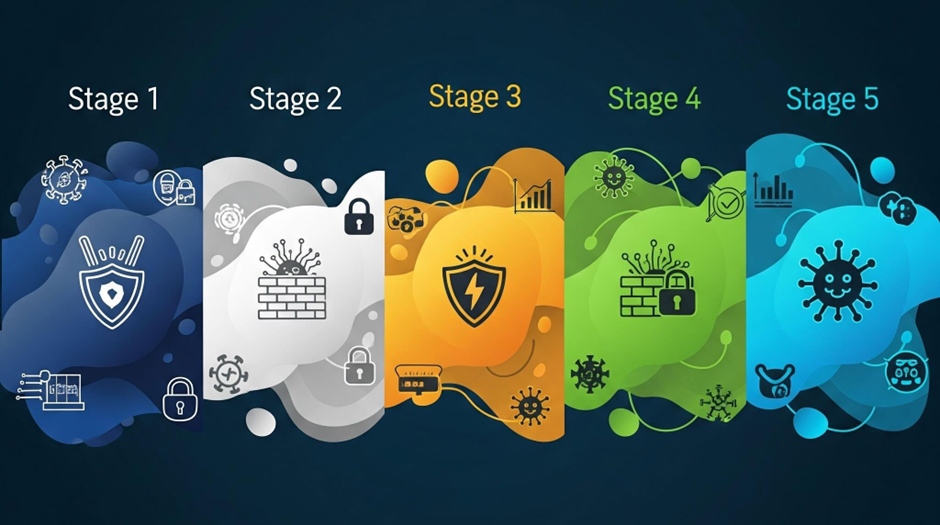
Social engineering attacks are rarely random or unplanned activities. Most attackers follow a structured methodology that allows them to collect information, build trust, manipulate victims, and achieve their objectives effectively. Understanding the phases of social engineering helps organizations identify suspicious behavior early and implement defensive measures before attacks succeed. Modern social engineering campaigns commonly involve reconnaissance, relationship development, exploitation, execution, and exit strategies. Attackers carefully plan each phase to reduce detection and maximize operational success.
Phase 1 – Reconnaissance
The reconnaissance phase involves collecting information about targets, organizations, technologies, communication methods, and employee behavior. Attackers use Open Source Intelligence (OSINT), social media profiling, metadata analysis, and public information gathering to understand their targets before initiating communication.
Reconnaissance Objectives
| Objective | Purpose |
|---|---|
| Employee Identification | Select attack targets |
| Technology Discovery | Identify organizational systems |
| Contact Collection | Gather communication details |
| Behavioral Analysis | Understand victim habits |
| Organizational Mapping | Study company hierarchy |
Common Reconnaissance Sources
- Social media platforms
- Company websites
- Public documents
- Search engines
- Online forums
- Employee directories
- Leaked databases
Phase 2 – Relationship Development
During this phase, attackers establish trust and credibility with victims. Attackers may impersonate coworkers, executives, vendors, technical support staff, or external partners. Communication is designed to appear natural and legitimate to avoid suspicion.
Common Relationship Techniques
| Technique | Objective |
|---|---|
| Friendly Communication | Build victim confidence |
| Authority Impersonation | Increase compliance |
| Shared Interests | Improve trust |
| Professional Language | Appear legitimate |
| Gradual Interaction | Reduce suspicion |
Indicators of Relationship Manipulation
- Unexpected familiarity
- Repeated communication attempts
- Excessive trust-building behavior
- Requests for internal information
- Emotional manipulation attempts
Phase 3 - Exploitation
The exploitation phase occurs when attackers manipulate victims into revealing information, granting access, performing financial transactions, or executing unsafe actions. This phase commonly involves phishing emails, fake login portals, malicious attachments, or verbal manipulation.
Exploitation Objectives
- Credential theft
- Financial fraud
- Malware installation
- Unauthorized access
- Confidential information theft
- Internal reconnaissance
Common Exploitation Methods
| Attack Method | Purpose |
|---|---|
| Phishing Emails | Credential harvesting |
| Vishing Calls | Information theft |
| Fake Portals | Login compromise |
| Malicious Attachments | Malware delivery |
| Tailgating | Physical access |
Phase 4 - Execution
In the execution phase, attackers achieve their primary objective after successfully manipulating the victim. This may involve transferring funds, accessing systems, stealing data, deploying malware, or escalating privileges inside organizational environments.
Execution Activities
| Activity | Result |
|---|---|
| Account Access | System compromise |
| Malware Deployment | Infrastructure infection |
| Data Exfiltration | Information theft |
| Privilege Escalation | Expanded attacker control |
| Financial Transactions | Monetary fraud |
Common Attack Outcomes
- Data breaches
- Financial loss
- Operational disruption
- Reputation damage
- Credential exposure
Phase 5 - Exit Strategy and Covering Tracks
After completing the attack, cybercriminals often attempt to remove evidence, maintain persistence, or avoid detection. Attackers may delete communication logs, disable alerts, remove malware traces, or continue monitoring compromised accounts silently.
Common Exit Activities
- Log deletion
- Malware cleanup
- Credential persistence
- Communication removal
- Access maintenance
Persistence Techniques
| Technique | Purpose |
|---|---|
| Credential Retention | Future access |
| Backdoor Installation | Persistent compromise |
| Account Monitoring | Continued surveillance |
| Hidden Malware | Long-term access |
Indicators of Social Engineering Phases
Organizations can identify suspicious behavior by monitoring indicators associated with each attack phase.
Behavioral Indicators Matrix
| Phase | Suspicious Activity |
|---|---|
| Reconnaissance | Excessive information gathering |
| Relationship Development | Unusual communication behavior |
| Exploitation | Suspicious requests or links |
| Execution | Unauthorized activities |
| Exit Strategy | Log tampering or persistence |
Defensive Strategies Against Social Engineering Phases
Organizations should implement layered defensive controls capable of detecting attacks during each phase.
Recommended Defensive Measures
- Employee awareness training
- Access monitoring systems
- Verification procedures
- Security awareness simulations
- Multi-factor authentication
- Incident reporting workflows
- Physical security controls
Which social engineering phase involves information gathering?
Relationship development builds victim trust.
Is phishing commonly used during exploitation?
Which phase involves achieving attacker objectives?
An attacker studies employee behavior before communication. Which phase is this?
Tailgating may occur during exploitation activities.
Which phase attempts to avoid detection after attacks?
Which activity involves building victim confidence?
Credential harvesting is commonly associated with exploitation.
Which phase may involve log deletion?
Which phase commonly uses OSINT techniques?
Verification procedures reduce social engineering success rates.