
Session Hijacking
Introduction to Session Hijacking
What is Session Hijacking?
Understanding how attackers steal active user sessions
A cyberattack where an attacker takes control of an active session. After login, the server creates a session with a unique Session ID sent by the browser with each request. If stolen, attackers can impersonate the user without the password, gaining unauthorized access to accounts and sensitive data.
⚠ Common Impacts
🔓 Unauthorized Access
Attackers gain access to victim accounts without passwords.
📂 Data Theft
Sensitive personal or business information can be stolen.
💳 Financial Fraud
Attackers may perform unauthorized transactions or purchases.
📧 Social Media Access
Hijacked sessions can expose emails and social media accounts.
🌐 Client–Server Communication
💻 Client
The user's device such as a laptop, smartphone, or browser.
🖥 Server
Hosts applications, websites, and databases for users.
TCP Three-Way Handshake
Communication usually uses TCP/IP. TCP establishes a connection via the Three-Way Handshake:
- SYN – Client requests connection
- SYN-ACK – Server accepts request
- ACK – Client confirms connection
🔐 Session IDs and Authentication
After login, the server generates a unique Session ID that is stored in browser cookies. The server uses this ID to identify authenticated users.
A secure Session ID should be long, random, encrypted, and unpredictable . Weak Session IDs are easier for attackers to guess or steal.
Session Hijacking allows attackers to control an active session.
Session IDs are sent by the browser with each request.
The client in client-server communication is the server device.
TCP Three-Way Handshake starts with SYN.
A secure Session ID should be predictable.
Types of Session Hijacking and Attack Methods
Types of Session Hijacking
Different techniques attackers use to take over sessions
⚡Active Hijacking
The attacker disconnects the legitimate user and takes over the active session, often using DoS techniques or spoofed packets.
👁 Passive Hijacking
The attacker silently monitors communication and captures session information without interrupting the user's connection.
🔄 Hybrid Hijacking
Combines active and passive techniques such as Blind Spoofing and Non-Blind Spoofing to exploit sessions.
Methods to Steal Session IDs
Common attack methods used to capture active sessions
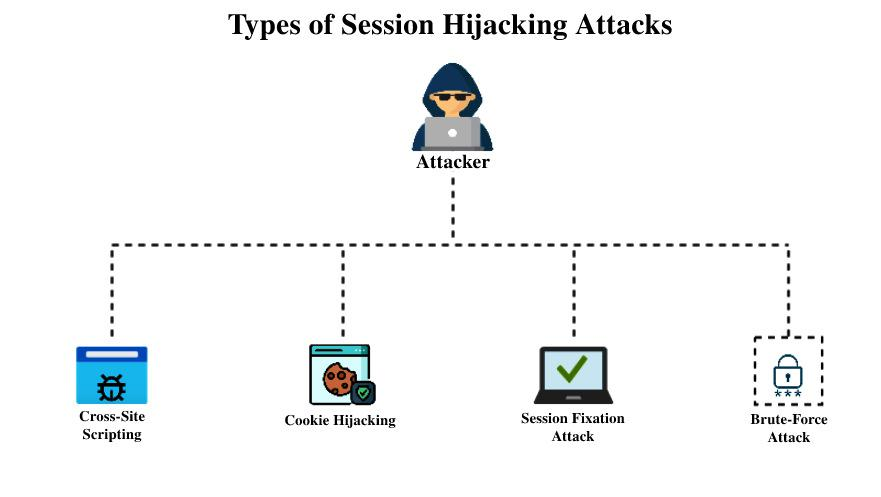
📡 Packet Sniffing
Attackers capture network traffic using tools like Wireshark or Tcpdump to steal cookies, session IDs, usernames, and passwords.
💉 Cross-Site Scripting (XSS)
Malicious JavaScript is injected into webpages to access browser cookies and steal Session IDs from users.
🔓 Brute Force
Attackers repeatedly guess Session ID combinations until a valid session is discovered. Weak IDs are highly vulnerable.
Which attack silently monitors communication?
Is Wireshark used for packet analysis?
Which attack injects malicious JavaScript?
Does Active Hijacking disconnect the victim?
What attack guesses Session ID combinations?
Is public Wi-Fi risky for session hijacking?
Which spoofing attack allows traffic visibility?
Can packet sniffing capture cookies?
Which attack type combines active and passive methods?
SQLi login payload?
SSL Strip Attacks and Prevention Techniques
Advanced Session Hijacking Attacks
Common network-based techniques used by attackers
🔓 SSL Strip Attack
Downgrades secure HTTPS connections into unencrypted HTTP communication, exposing sensitive data such as usernames, passwords, cookies, and Session IDs in plain text.
🌐 ARP Spoofing
A Man-in-the-Middle (MITM) attack where attackers reroute traffic through their device to monitor, capture, or modify packets. Public Wi-Fi networks are especially vulnerable.
Prevention Techniques
Security measures to reduce Session Hijacking risks
🌐 Network Layer Security
- Use HTTPS and SSL/TLS
- Avoid public Wi-Fi networks
- Use secure protocols like SSH
🧩 Application Layer Security
- Use strong and random Session IDs
- Regenerate Session IDs after login
- Enable session expiration timeouts
- Use Secure & HttpOnly cookies
- Enable Multi-Factor Authentication (MFA)
🚀 Modern Security Practices
- Enable HSTS
- Use SameSite cookies
- Upgrade to TLS 1.3
- Monitor suspicious sessions
Conclusion
Session Hijacking bypasses authentication by stealing valid Session IDs using techniques such as packet sniffing, XSS, ARP spoofing, and SSL stripping. Implementing strong security practices like HTTPS, secure session management, HttpOnly cookies, MFA, and user awareness significantly reduces the risk of attacks.
Which attack downgrades HTTPS to HTTP?
Does SSL/TLS encrypt communication?
Which attack redirects traffic through the attacker?
Are public Wi-Fi networks vulnerable to MITM attacks?
What protocol secures web communication?
Does MFA add extra authentication security?
Which cookie type blocks JavaScript access?
Can ARP Spoofing create a MITM attack?
Should Session IDs regenerate after login?
Which technology forces HTTPS usage?
How Attackers Perform Session Hijacking
Session Hijacking Techniques
Understanding how attackers exploit authenticated sessions
Attackers exploit weaknesses in network communication and vulnerable web applications to hijack active user sessions. Their objective is to gain unauthorized access to authenticated accounts without needing the victim’s password.
Key Techniques Used by Attackers
Common attack methods used to capture or manipulate sessions
📡 Session Sniffing
Attackers monitor network traffic to capture cookies, tokens, and Session IDs transmitted over insecure or unencrypted channels.
💉 Cross-Site Scripting (XSS)
Malicious scripts injected into trusted websites steal session information directly from the victim’s browser.
🔮 Session Prediction
Weak or predictable Session IDs can be guessed by attackers, allowing them to impersonate authenticated users.
🎭 Session Fixation
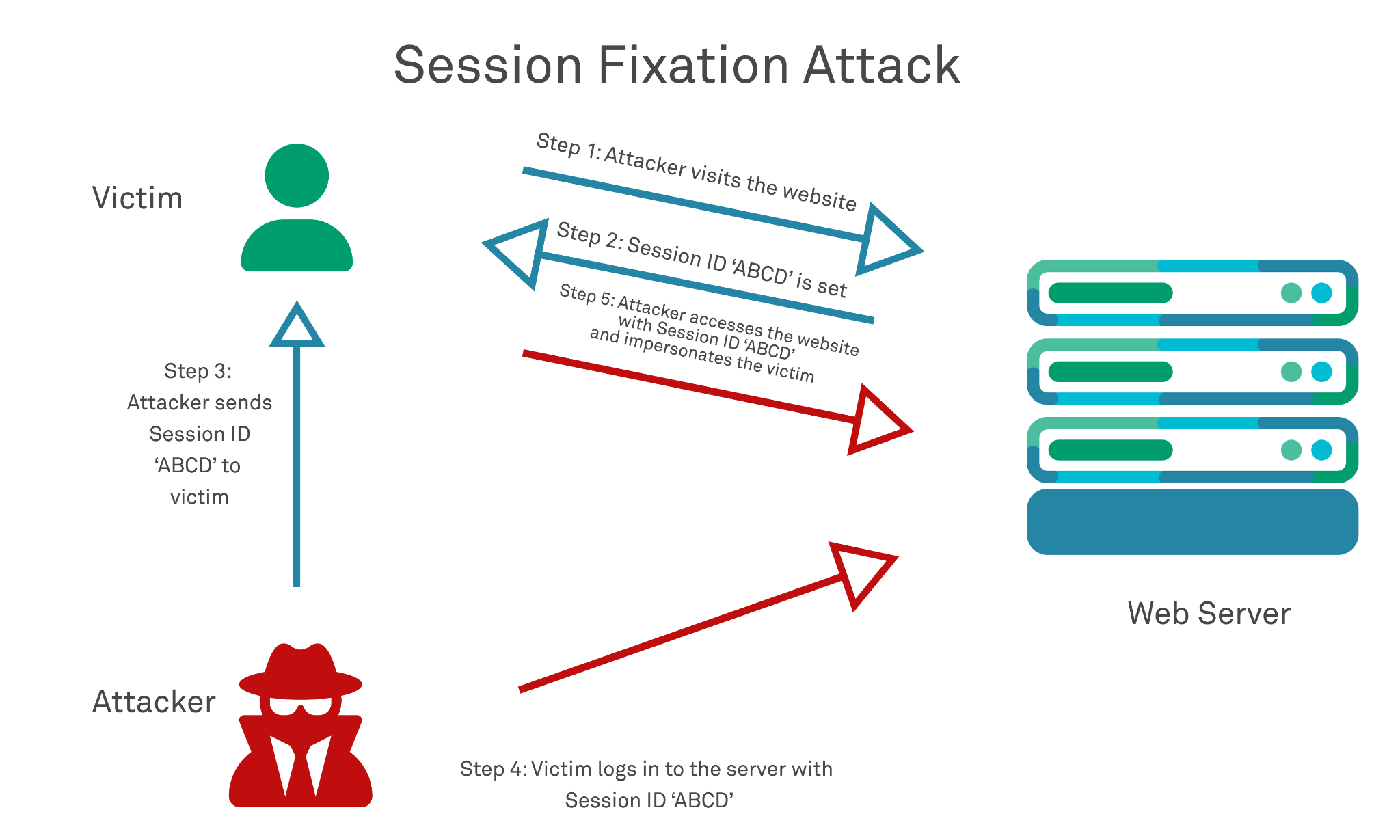
Attackers force victims to use a predefined Session ID and later reuse the same session after login.
🌐 MITM Attacks
Man-in-the-Middle attackers intercept communication between the user and the server to capture or manipulate session data.
Important Notes
Essential concepts every cybersecurity learner should understand
🔐 No Password Required
Session Hijacking attacks do not require the attacker to know the victim’s actual password.
⚠ Exploits Weak Security
Attackers target weak session management, insecure networks, and vulnerable web applications.
🛡 Strong Protection Matters
HTTPS, secure cookies, strong Session IDs, and user awareness significantly reduce attack risks.
Overview of the Machine
Hands-on vulnerable lab environment for practical learning
This machine is a deliberately vulnerable web application environment designed to provide hands-on practice with Session Hijacking techniques. Students can safely explore attacks such as Cross-Site Scripting (XSS), SQL Injection, packet sniffing, and session cookie manipulation to access user and administrator dashboards.
The ultimate objective is to capture the flag by combining theoretical cybersecurity concepts with practical exploitation skills in a controlled learning environment.
What is the content of the flag?
What is the name of the admin user?
What is the cookie of the admin user?
What is the decoded cookie of the admin user?
What user gets after SQL injection?
What is the cookie after SQL injection?
What is the decoded form of user cookie?
What is the algorithm used in the cookie?
Where in the browser is the cookie present?
Does a Session ID identify an authenticated user?