
IDS, IPS & Firewall
Introduction to Network Security Defense
Understanding Defensive Security Systems
Modern computer networks are constantly exposed to threats such as unauthorized access, malware, reconnaissance scans, brute-force attacks, and exploitation attempts. To defend against these threats, organizations deploy multiple layers of security technologies including firewalls, Intrusion Detection Systems (IDS), and Intrusion Prevention Systems (IPS).
A firewall acts as the first line of defense by filtering network traffic based on predefined rules. IDS systems monitor traffic and generate alerts when suspicious activity is detected, while IPS systems actively block malicious traffic in real time.
This section introduces learners to the purpose of these technologies, how they interact together, and why layered security is important in enterprise environments.
Key Learning Points
- Importance of layered security
- Difference between detection and prevention
- Network traffic monitoring basics
- Role of defensive security tools
- Understanding attack surfaces
What security system mainly filters network traffic?
True or False: IDS automatically blocks malicious traffic.
A system that prevents attacks automatically is called?
Scenario: An administrator wants alerts without blocking traffic. Which system should be used?
Yes or No: Layered security improves protection.
True or False: Firewalls inspect all traffic identically.
Firewall Fundamentals
What is a Firewall?
A firewall is a network security device or software application that monitors and controls incoming and outgoing traffic according to security rules. It acts as a barrier between trusted and untrusted networks. Firewalls are commonly deployed at network boundaries to block unauthorized access while allowing legitimate communication.
Firewalls can operate using different filtering methods such as packet filtering, stateful inspection, and application-level inspection. Administrators configure rules based on IP addresses, ports, protocols, and services to control network access.
In enterprise environments, firewalls are essential for reducing attack surfaces and controlling exposure to external threats.
Key Learning Points
- Packet filtering
- Allow and deny rules
- Stateful inspection
- Port-based filtering
- Network segmentation
- Inbound vs outbound traffic
Scenario: Traffic on port 22 is blocked by policy. Which service is affected?
True or False: Firewalls can filter traffic using ports
What type of firewall tracks connection states?
Yes or No: Firewalls reduce attack surfaces.
Scenario: An administrator blocks outbound FTP traffic. What is being controlled?
Which firewall action permits traffic?
Intrusion Detection System (IDS)
Understanding IDS
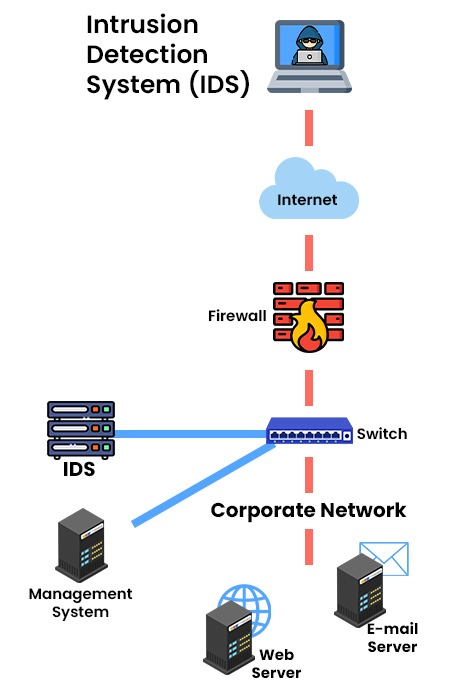
An Intrusion Detection System (IDS) is a monitoring solution designed to identify suspicious activities, malicious traffic, policy violations, or attack attempts within a network or host system. IDS solutions analyze packets, logs, and system behavior to detect threats.
Unlike IPS, IDS systems are passive and do not block traffic automatically. Instead, they generate alerts that security teams investigate manually.
IDS technologies commonly use signature-based detection, anomaly-based analysis, and behavioral monitoring to identify attacks such as port scans, malware communication, brute-force attempts, and exploit activity.
Key Learning Points
-
Passive monitoring
-
Alert generation
-
Signature-based detection
-
Anomaly-based detection
-
Log analysis
-
Network visibility
True or False: IDS is considered a passive system.
Scenario: A system generates alerts after detecting unusual traffic spikes. Which technology is likely used?
What detection method uses known attack patterns?
Yes or No: IDS can analyze logs.
Which IDS method detects unusual behavior?
Scenario: Security analysts receive notifications but traffic continues normally. Which system is active?
Intrusion Prevention System (IPS)
Understanding IPS
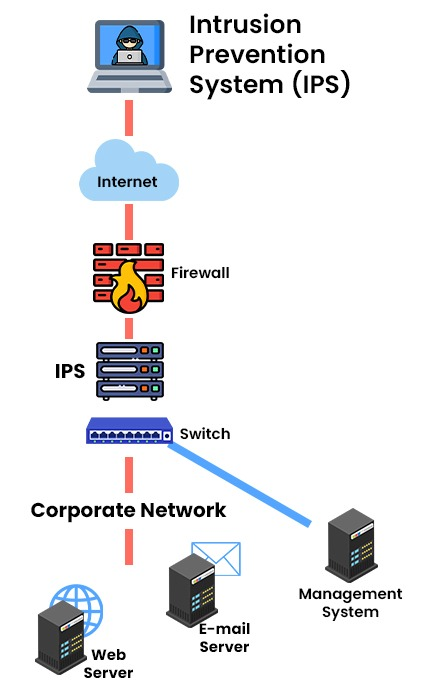
An Intrusion Prevention System (IPS) is an active security technology designed to detect and immediately stop malicious activities in network traffic. IPS systems are often deployed inline so they can inspect and block packets before they reach target systems.
IPS solutions combine detection capabilities with automated response mechanisms. They can block malicious IP addresses, terminate suspicious sessions, drop packets, or modify firewall rules dynamically.
IPS technologies help organizations reduce response times and prevent attacks from succeeding before damage occurs.
Key Learning Points
-
Inline deployment
-
Real-time blocking
-
Automated response
-
Packet dropping
-
Threat prevention
-
Active defense
True or False: IPS can block malicious packets automatically.
Scenario: Suspicious traffic is immediately terminated before reaching the server. Which system performed this action?
What deployment style allows IPS to stop packets directly?
Yes or No: IPS reduces response time.
Which IPS action removes suspicious packets?
True or False: IPS only generates alerts.
Signature vs Anomaly Detection
Detection Techniques
Security systems use multiple techniques to identify threats. Signature-based detection compares network activity against a database of known attack patterns. It is highly effective for detecting previously identified threats but struggles against unknown attacks.
Anomaly-based detection builds a baseline of normal behavior and identifies deviations from expected activity. This method can detect zero-day attacks and unknown threats but may generate false positives if the baseline is inaccurate.
Understanding the strengths and weaknesses of both methods is critical for effective security monitoring.
Key Learning Points
- Known vs unknown threats
- Baseline behavior analysis
- False positives
- Zero-day detection
- Pattern matching
- Behavioral analysis
Which detection type identifies unknown behavior?
True or False: Signature detection works best against known threats.
Scenario: A security system flags abnormal traffic never seen before. Which detection method triggered?
What issue commonly affects anomaly detection?
Yes or No: Signature systems require attack databases.
Scenario: Malware matches an existing rule database. Which detection method identified it?
Logs, Alerts & Traffic Analysis
Detection Techniques
Security systems use multiple techniques to identify threats. Signature-based detection compares network activity against a database of known attack patterns. It is highly effective for detecting previously identified threats but struggles against unknown attacks.
Anomaly-based detection builds a baseline of normal behavior and identifies deviations from expected activity. This method can detect zero-day attacks and unknown threats but may generate false positives if the baseline is inaccurate.
Understanding the strengths and weaknesses of both methods is critical for effective security monitoring.
Key Learning Points
- Known vs unknown threats
- Baseline behavior analysis
- False positives
- Zero-day detection
- Pattern matching
- Behavioral analysis
True or False: Logs help investigators analyze attacks.
Scenario: Multiple failed logins appear in security records. What is being analyzed?
Which system centralizes security event analysis?
Yes or No: Traffic analysis improves visibility.
What process examines packets for suspicious activity?
Scenario: Analysts investigate repeated connection attempts from one IP. What are they reviewing?
Evasion Techniques & Defensive Hardening
Security Monitoring and Analysis
Logs and alerts provide visibility into network activities, attack attempts, and system events. Security analysts use these records to investigate incidents, identify attack patterns, and improve defenses.
Traffic analysis involves inspecting packets, connection attempts, protocols, and communication behavior to detect malicious activities. Proper log management is essential because poor visibility can allow attackers to operate unnoticed.
Security Information and Event Management (SIEM) systems are often integrated with IDS and IPS solutions to centralize and analyze logs efficiently.
Key Learning Points
- Event logging
- Alert investigation
- Packet inspection
- Traffic monitoring
- SIEM integration
- Incident analysis
Scenario: An attacker splits malicious packets into smaller fragments to avoid detection. What technique is being used?
True or False: Rule tuning improves detection quality.
What inspection method analyzes packet contents deeply?
Yes or No: Encrypted traffic can hide malicious activity.
Scenario: Security administrators disable unnecessary services to reduce risk. What process is this?
True or False: Attackers never attempt to bypass IDS systems.
Real-World Defensive Operations
Attack Evasion and Protection
Attackers often attempt to bypass security controls using fragmentation, encrypted traffic, obfuscation, protocol manipulation, and timing-based techniques. These evasion strategies are designed to avoid detection by IDS and IPS systems.
Defensive hardening involves improving rule quality, updating signatures, enabling deep packet inspection, reducing unnecessary services, and tuning detection systems to minimize weaknesses.
Security professionals must continuously adapt defenses because attackers constantly evolve their techniques.
Key Learning Points
- Traffic obfuscation
- Fragmentation attacks
- Encrypted payloads
- Deep packet inspection
- Rule tuning
- Security hardening
True or False: Security tools work better together in layers.
Scenario: Analysts review alerts while automated systems block malicious traffic. What type of defense model is being used?
Which activity improves detection accuracy over time?
Yes or No: Human analysts are still important in cybersecurity.
Scenario: Multiple security tools share logs into one platform. What system is likely being used?
What process involves improving defenses continuously?