IT Audit
Compliance ensures an organization adheres to legal, regulatory, and industry security standards like GDPR, HIPAA, and PCI-DSS. It involves implementing policies and controls to protect sensitive data, prevent legal risks, and maintain customer trust. Compliance defines baseline security measures but doesn’t guarantee overall cybersecurity effectiveness.
Compliance
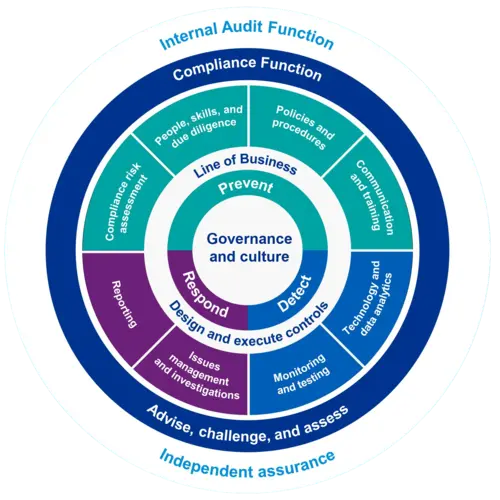
Compliance ensures an organization adheres to legal, regulatory, and industry security standards like GDPR, HIPAA, and PCI-DSS. It involves implementing policies and controls to protect sensitive data, prevent legal risks, and maintain customer trust. Compliance defines baseline security measures but doesn’t guarantee overall cybersecurity effectiveness.

ISO
The International Organization for Standardization (ISO) is an independent, non-governmental body that develops and publishes global standards to ensure quality, safety, and efficiency across various industries. Established in 1947, ISO sets benchmarks for technology, manufacturing, and services, facilitating international trade and innovation. Its widely recognized standards, such as ISO 9001 for quality management and ISO 27001 for information security, help organizations improve performance, meet regulatory requirements, and enhance customer trust.
NIST
The National Institute of Standards and Technology (NIST) is a U.S. federal agency that promotes innovation and industrial competitiveness through standards, technology, and research. Part of the U.S. Department of Commerce, NIST develops guidelines for cybersecurity, encryption, and measurements, ensuring reliability and security across industries. Its frameworks, including the NIST Cybersecurity Framework, help organizations manage risks, enhance technological advancements, and improve overall security and efficiency in various sectors.